
Introduction to Snowflake
Ever wondered how groups like Netflix or Adobe control and examine oceans of facts without drowning in complexity or fees? Meet Snowflake—the sport-converting cloud statistics platform that’s rewriting the rules of modern-day statistics warehousing.
1.What is Snowflake?
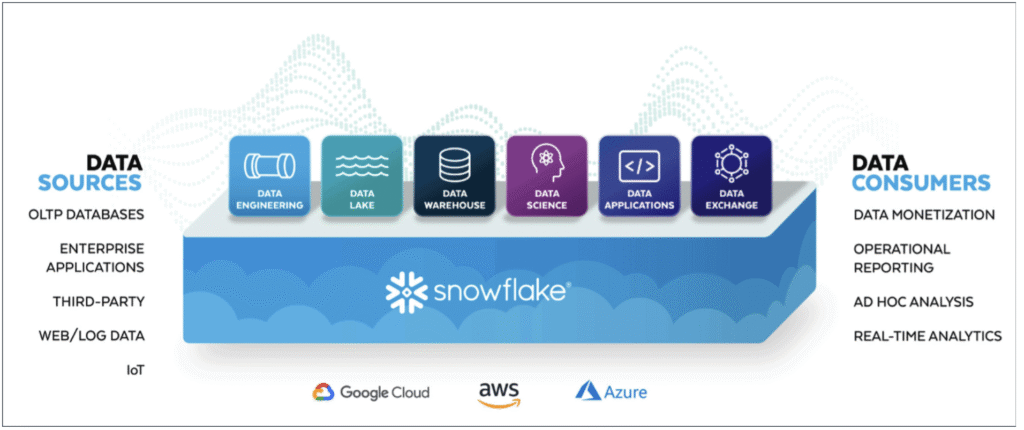
Snowflake is a cloud-based, totally statistical warehouse answer constructed from the ground up to leverage the strength and flexibility of the cloud. It’s designed to manipulate each structured and semi-dependent statistic with blazing velocity and ease.
A Brief History of Snowflake
Founded in 2012 by Benoit Dageville, Thierry Cruanes, and Marcin Żukowski, Snowflake burst onto the scene with a vision to separate storage from compute—a bold move that conventional information warehouses hadn’t mastered. By 2020, it went public in one of the most important tech IPOs in history.
How Snowflake Differs from Traditional Data Warehouses
Unlike legacy systems tied to on-premise infrastructure, Snowflake runs absolutely inside the cloud—on AWS, Azure, and Google Cloud. Its multi-cluster architecture and elastic scalability permit users to run a couple of workloads concurrently without bottlenecks.
2.Understanding the Basics of Snowflake
Introduction to Snowflake
Ever felt crushed by the buzzwords surrounding cloud information platforms? You’re no longer by myself. But Snowflake? It’s one of the few that in reality lives up to the hype. Snowflake is a powerful cloud-based data warehouse solution that simplifies statistics storage, processing, and evaluation—without the headaches of traditional systems. So, why are all people suddenly speaking about it? Because it’s converting the game. So, why are all people suddenly speaking about it? Because it’s converting the game.
So, why are all people suddenly speaking about it? Because it’s converting the game.
The Origins of Snowflake
Snowflake was born in 2012, co-founded by Benoit Dageville, Thierry Cruanes, and Marcin Żukowski—3 database engineers with a formidable imagination and prescience: construct a statistics warehouse natively for the cloud. Not a migration. A reinvention.
Fast forward, and Snowflake has long since gone from a tech underdog to a Wall Street darling, with companies across industries jumping on board.
Architecture of Snowflake
One of the largest reasons for Snowflake’s large success? Its structure.
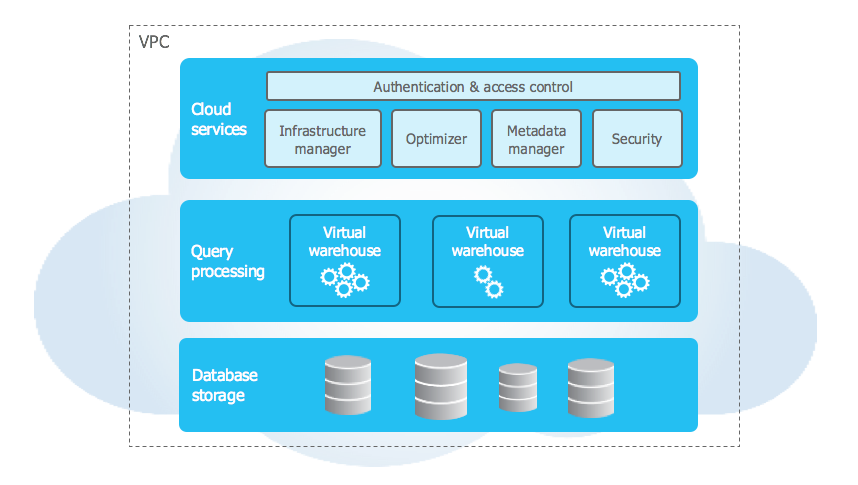
Unlike traditional databases, Snowflake has a multi-cluster, shared-statistics structure. Simply put, it separates storage and compute, so you can scale them independently. That method is no more about buying idle compute or looking forward to resources to unfasten.
Cloud-Native Structure
Snowflake wasn’t built to be set up on servers. It lives and breathes the cloud. It runs on AWS, Azure, and GCP—making it cloud-agnostic and ultra-flexible.
Separation of Storage and Compute
You can store massive amounts of facts and handily pay for compute while you question it. Want to analyze a terabyte of records? Go in advance—the handiest the digital warehouse (compute layer) fires up, and the simplest for as long as you want it.
Multi-Cluster Architecture
Multiple teams can run complex queries at the same time—without slowing each other down. That’s the magic of independence.
3.Key Features That Make Snowflake Unique
Introduction
Ever wonder why Snowflake continues popping up in tech talks, LinkedIn posts, or job listings? It’s no longer simply hype—Snowflake is sincerely remodeling how corporations shop, proportion, and examine records. But what exactly makes it so unique?
Let’s smash down what Snowflake is all about and discover the precise capabilities that can be putting it miles aside from conventional information structures.
Architecture That Breaks The Mold
Cloud-Native Design
Snowflake was built for the cloud—now not simply “on” it. Unlike legacy databases retrofitted for the cloud, Snowflake was designed from the ground up to stay and thrive in cloud environments like AWS, Azure, and GCP. This method obviously scales, self-heals, and leverages cloud-native capabilities without a hitch.
Snowflake Online Training in Kukatpally
Separation of Compute and Storage
One of Snowflake’s standout functions is its capability to split compute and storage. Translation? You can scale storage and processing independently. This is a game changer—no extra overpaying for compute just to store more records.
Multi-Cluster Shared Data Architecture
Unlike conventional databases, which can choke under more than one query, Snowflake makes use of a multi-cluster shared statistics method. It can take care of hundreds of concurrent customers without compromising performance. No locking, no blockading, just clean performance.
4.Snowflake Use Cases
Data Warehousing
Centralized Storage for Diverse Data Types
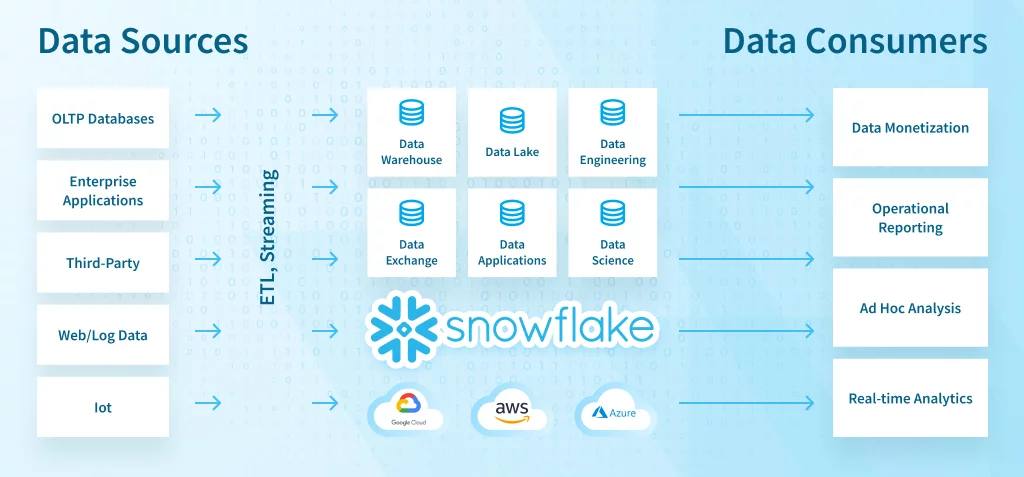
From established SQL tables to semi-based JSON, Snowflake swallows all of it. In that manner, you don’t want more than one structure to control distinctive sorts of records.
Real-Time Query Performance
Snowflake makes use of micro-partitioning and columnar storage to supply lightning-fast query speeds, regardless of how complex your datasets get.
Data Lake Integration
Unified Data Analytics Platform
Say goodbye to the “data swamp.” Snowflake acts as a data lake and a warehouse, giving you the best of both worlds — easy access and high performance.
Support for Structured and Semi-Structured Data
Whether it’s XML, Avro, or Parquet, Snowflake handles it effortlessly, letting you pull insights without tedious pre-processing.
Data Engineering
ETL and ELT Processes
Snowflake supports both conventional ETL and contemporary ELT. You can load uncooked information and remodel it later — which is ideal for agile groups who need flexibility.
Automation and Scheduling Pipelines
Combine Snowflake with tools like dbt or Apache Airflow to automate complicated workflows and save valuable dev time.
5.Snowflake vs Traditional Data Warehouses
Introduction
Data is often referred to as the brand-new oil, but without the proper equipment, it’s just uncooked material. This is where records warehouses are available—these systems accumulate, save, and control big volumes of information to assist agencies in making smarter, faster selections. But in terms of choosing a data warehouse, the talk often boils down to one big question: Snowflake or traditional statistics warehouses?
If you’ve ever questioned how these two compare and which one may make your enterprise pleasant, you’re in the right region. Let’s dive deep into the variations, advantages, and use instances of Snowflake and conventional statistics warehouses.
What is Snowflake Data Warehouse?
Snowflake is a cloud-based records warehousing platform designed to address massive amounts of records with surprising speed, flexibility, and scalability. Unlike conventional records warehouses, Snowflake leverages cloud infrastructure to supply seamless overall performance without the complications of handling hardware.
Why Learn Snowflake in 2025?
The statistics landscape is evolving rapidly, and corporations crave answers that are agile and cloud-local. Snowflake fits this invoice flawlessly. Its potential to scale on demand, help with numerous fact types, and offer comfortable information sharing makes it a favorite among organizations globally.
Growing demand for cloud data skills
Data specialists proficient in Snowflake are in hot demand as groups transition their analytics and statistics operations to the cloud. This fashion is not slowing down anytime soon!
Snowflake’s market position and benefits
Snowflake’s recognition is backed by its specific architecture, ease of use, and huge surrounding support. Mastering Snowflake can open doorways to exciting roles in information engineering, analytics, and cloud architecture.
6.Benefits of Using Snowflake
Introduction to Snowflake’s Revolutionary Cloud Data Platform
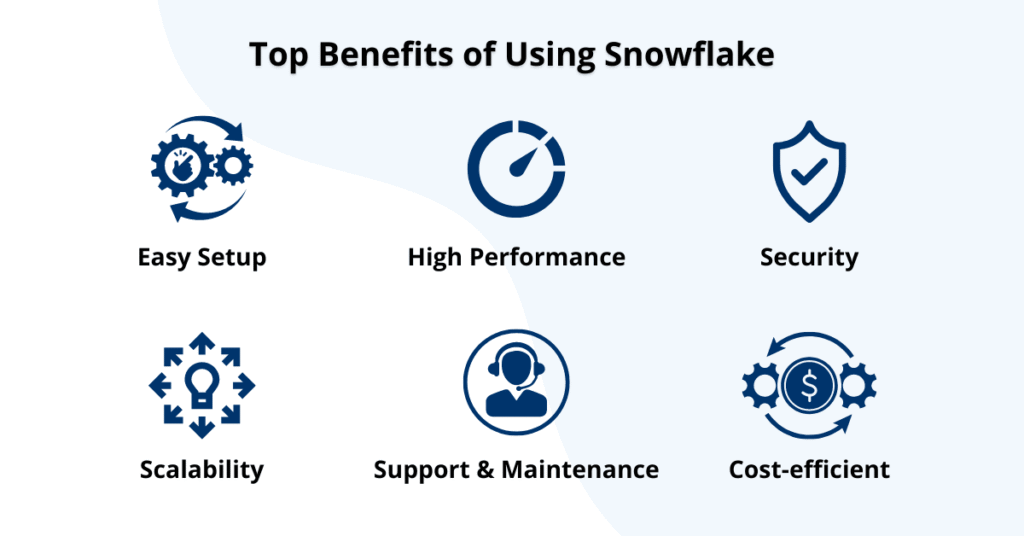
Snowflake has redefined how modern enterprises manage and scale their data infrastructure. As a cloud-native data warehouse, Snowflake delivers unparalleled performance, scalability, and flexibility. Built on a multi-cluster, shared data architecture, Snowflake enables seamless data storage, processing, and analytics, regardless of the data volume or complexity.
With its pay-as-you-go pricing model, zero-maintenance approach, and cross-cloud compatibility, Snowflake has become the go-to solution for data-driven organizations across industries. Below, we explore in depth the key benefits of using Snowflake, focusing on its technical advantages, business value, and scalability potential.
Architecture That Scales Effortlessly
At the core of Snowflake’s fulfillment is its multi-cluster shared records architecture, which separates compute from garage. This decoupling gives
Unlimited concurrency—Multiple compute clusters can get right of entry to the same records concurrently without overall performance degradation.
Independent scaling—Organizations can scale compute up or down without affecting storage.
Elasticity on call for—automatic aid provisioning guarantees workloads are finished with top-quality performance.
This structure removes conventional bottlenecks found in monolithic databases, ensuring real-time responsiveness and flexibility for records-intensive operations.
Seamless Cross-Cloud Compatibility
Snowflake is cloud-agnostic, running on AWS, Microsoft Azure, and Google Cloud Platform. This provides flexibility in infrastructure approach, allowing agencies to
Deploy globally with minimum latency.
Avoid supplier lock-in by way of switching or integrating across cloud providers.
Leverage current investments in any major cloud platform.
This multi-cloud technique guarantees records governance, compliance, and sovereignty across borders while enhancing operational resilience.
Exceptional Performance and Speed
Snowflake optimizes overall performance through the usage of a mixture of automatic query optimization, result caching, and clustered micro-partitioning. Key performance capabilities encompass
Automatic query tuning—no guide indexing or tuning is required.
Advanced caching mechanisms—frequently run queries go back to consequences right away from the cache.
Massively parallel processing (MPP)—Large workloads are processed quicker via allotted computing.
These functions translate into faster insights, decreased query prices, and an extraordinarily responsive facts surrounding.
Built-In Data Sharing and Collaboration
One of Snowflake’s most modern capabilities is Secure Data Sharing, which allows real-time sharing of live information between organizations without copying or transferring records. Benefits encompass
No ETL or API overhead—records are shared immediately from Snowflake’s structure.
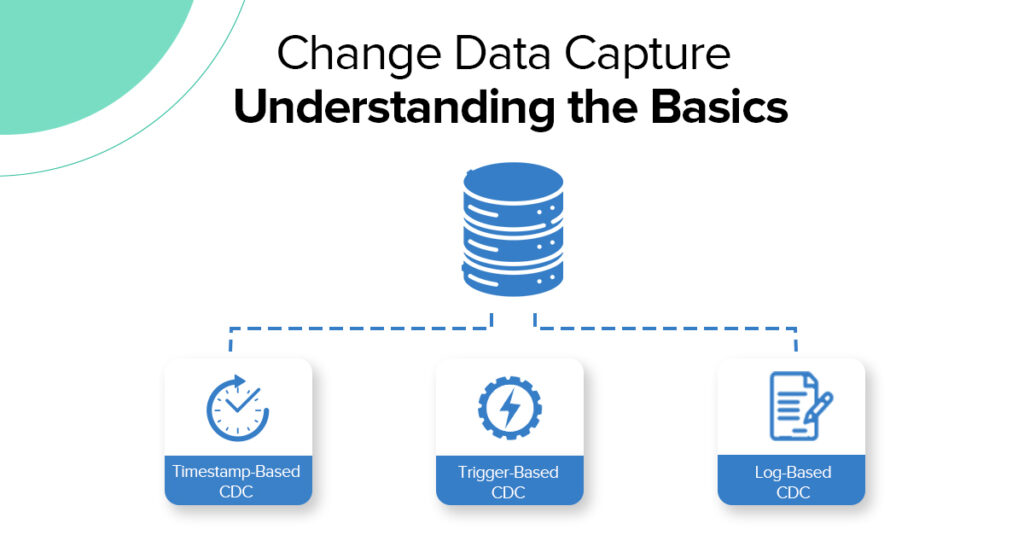
Granular access manipulation—Share precise datasets while keeping strict governance.
Monetize facts and belongings—Enterprises can provide facts and products through Snowflake’s Data Marketplace.
This transforms how companies collaborate, monetize, and distribute information securely and successfully.
Unified Support for Structured and Semi-Structured Data
Snowflake natively supports an extensive range of statistics types, which includes
Structured statistics: Traditional tabular facts from relational assets.
Semi-established information: JSON, Avro, Parquet, ORC, and XML.
This removes the need for separate records, lakes, or transformation gear, making Snowflake perfect for modern-day information workflows, consisting of those driven by using IoT, AI, and massive data analytics.
Advanced Security and Data Governance
Snowflake is built with security at its core, imparting business enterprise-grade safety with:
Always-on encryption for records at relaxation and in transit.
Support for function-based totally get right of entry to manage (RBAC).
Automatic data protection and row-level protection.
Compliance with primary standards: HIPAA, PCI DSS, SOC 2 Type II, FedRAMP, and GDPR.
These functions empower organizations to fulfill rigorous compliance necessities even as they safeguard touchy information throughout their entire statistics lifecycle.
Cost Efficiency and Transparent Pricing
Cost Efficiency and Transparent Pricing
Unlike conventional on-premises systems or inflexible cloud solutions, Snowflake uses a usage-based pricing model, which allows agencies to
Pay simply for what they use—compute and garage are billed one after the other.
Auto-droop and resume compute—reduces idle time and useless charges.
Monitor utilization in actual time— Integrated dashboards assist in manipulating and predicting spending correctly.
This method guarantees organizations of all sizes can benefit from organization-grade overall performance without prohibitive expenses.
7.Snowflake Integration with Third-Party Tools
Introduction to Snowflake’s Extensibility
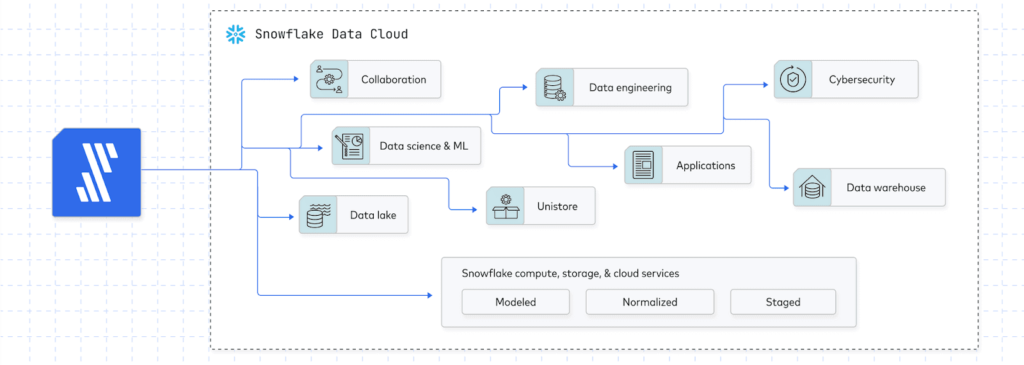
Snowflake has unexpectedly emerged as a main cloud records platform, famed for its scalability, overall performance, and multi-cloud abilities. One of the most effective components of Snowflake is its capacity to seamlessly integrate with an extensive variety of 0.33-birthday celebration gear, permitting organizations to liberate fees from their records quicker and more efficaciously. From ETL platforms and BI equipment to data science frameworks and cloud services, Snowflake’s atmosphere aid is comprehensive and continues to develop.
Benefits of Snowflake’s Third-Party Integration Capabilities
Snowflake’s architecture is built for interoperability. The platform helps at ease information sharing, 0-reproduction cloning, and native connectors, which makes it a desired choice for organizations seeking to construct modern-day record stacks. Key benefits encompass
Accelerated Time-to-Insight: Direct integration with BI gear means analysts can get right of entry to real-time insights with minimum put-off.
Simplified Data Workflows: ETL/ELT equipment can push or pull information from Snowflake without guide interventions.
Scalability and Flexibility: With cloud-local support, Snowflake handles absolutely any scale of facts, accommodating numerous third-birthday celebration device needs.Snowflake Online Training.
Top Categories of Third-Party Tools for Snowflake Integration
1. ETL and ELT Tools
Snowflake helps seamless integration with principal ETL/ELT systems, which allows for automating the facts ingestion and transformation tactics.
Fivetran: Offers automated, absolutely controlled connectors for statistics ingestion into Snowflake.
Talend: Enables real-time statistics integration, cleaning, and transformation.
Matillion: Designed particularly for cloud systems, it offers local help for Snowflake pipelines.
Apache NiFi: An effective records go with the flow tool that integrates well with Snowflake through the use of JDBC.
Integration Advantages:
Schedule batch jobs or real-time streaming
Minimized information latency
Metadata and lineage monitoring
2.Business Intelligence (BI) and Analytics Tools
Snowflake’s compatibility with BI structures allows groups to visualise and analyze large datasets resultseasily.
Tableau: Native connector available, enabling drag-and-drop analytics on Snowflake-hosted facts.
Power BI: Offers high-performance connectivity thru ODBC/JDBC and Snowflake connectors.
Looker: Easily models Snowflake statistics the use of LookML for streamlined dashboards.
Qlik Sense: Provides associative analytics and direct question help for Snowflake.
Integration Advantages:
Ad hoc querying skills
Direct access to stay information
Governance and role-based get entry to manage
3.Machine Learning and Data Science Platforms
For data science workflows, Snowflake integrates with various ML platforms and programming languages.
- DataRobot: Empowers automated ML on Snowflake datasets.
- H2O.ai: Connects to Snowflake for large-scale model training.
- Amazon SageMaker: Snowflake data can be securely exported to S3 for use in SageMaker.
- Jupyter Notebooks: Python users can leverage the
snowflake-connector-pythonfor real-time interaction.
Integration Advantages:
- Streamlined data access for model training
- Reduced ETL time
- Enhanced collaboration between data engineers and scientists
4.Data Governance and Security Tools
Snowflake’s facts governance framework is superior through integration with protection and compliance equipment.
Collibra: Offers facts cataloging, lineage, and governance offerings.
Alation: Provides a collaborative data intelligence platform with Snowflake help.
Immuta: Enables policy-primarily based access controls for Snowflake users.
Okta and Azure AD: Integration with identity control tools for SSO and MFA.
Integration Advantages:
Centralized governance
Automated coverage enforcement
Compliance with HIPAA, GDPR, and SOC 2
5.Cloud Platforms and Storage Services
Snowflake’s move-cloud abilities support native integrations with AWS, Azure, and Google Cloud.
Amazon S3/Azure Blob/Google Cloud Storage: Snowflake supports bulk loading and unloading of records.
AWS Lambda/Azure Functions: Event-pushed serverless features can cause Snowflake actions.
Google BigQuery: Interoperability allows for record sharing and migration between warehouses.
Integration Advantages:
Elastic compute and garage scaling
Event-pushed architectures
Hybrid and multi-cloud support
How to Set Up Integrations with Snowflake
Step 1: Establish Secure Connectivity
Use Snowflake’s local connectors (ODBC, JDBC, Python, Spark) or 1/3-birthday celebration gear’s built-in alternatives. Ensure community policies, firewalls, and IAM roles are effectively configured.
Step 2: Configure Data Warehouses and Roles
Create separate warehouses and roles for integration equipment to manipulate compute fees and enforce the right of entry to control.
Step 3: Automate and Schedule Workflows
Use orchestration tools like Apache Airflow, dbt, or Prefect to manage complex pipelines across Snowflake and external services.
Step 4: Monitor and Optimize Performance
Use Snowflake’s Query Profiler, Resource Monitors, and Access History to optimize performance and song usage across integrations.
Conclusion
Snowflake is more than a data warehouse; it’s an entire paradigm shift for the way companies manage data today. If you’re looking to keep up with the field of data, acquiring Snowflake through a formal course is a smart choice. It will equip you with the necessary skills and knowledge to handle modern cloud-based data environments effectively.
So, why put it off? Get yourself enrolled in the Snowflake course, take a break, put on your sleeve, and begin to master what’s next in data warehousing now!
FAQs
Question 1: What qualifications do I require prior to beginning a Snowflake training course?
Basic SQL knowledge and knowledge of cloud concepts are useful but aren’t required.
Q2. How long will it take to get proficient in Snowflake?
In general, 4-8 weeks of concentrated training and study can make you prepared for your job.
Q3. What can I do to learn Snowflake without any prior SQL knowledge?
Yes, however, combining Snowflake studying with SQL tutorials can speed up your learning.
Q4: What’s the average wage in the field of Snowflake experts?
Salaries differ; however, Snowflake abilities often will result in jobs that pay between $90K and $150K+ per year.
Q5. Do you know if Snowflake certifications are accepted globally?
Absolutely, Snowflake certifications are respected all over the world and highly valued by top employers.