
Introduction
We live in a digital age where data is more valuable than gold—and just as thieves once targeted vaults, modern attackers target networks and systems. This is where cybersecurity comes into play. Best Cybersecurity Online Course in Hyderabad.
But the big question is, are you prepared to defend yourself?
Hope InfoTech’s online cybersecurity training may be your ticket to a successful career in cybersecurity. This comprehensive training is designed to equip you with skills that are ready for battle, whether you are a student of IT, an employed professional, or a career switcher.

1. Top Cyber Threats Businesses Face Today
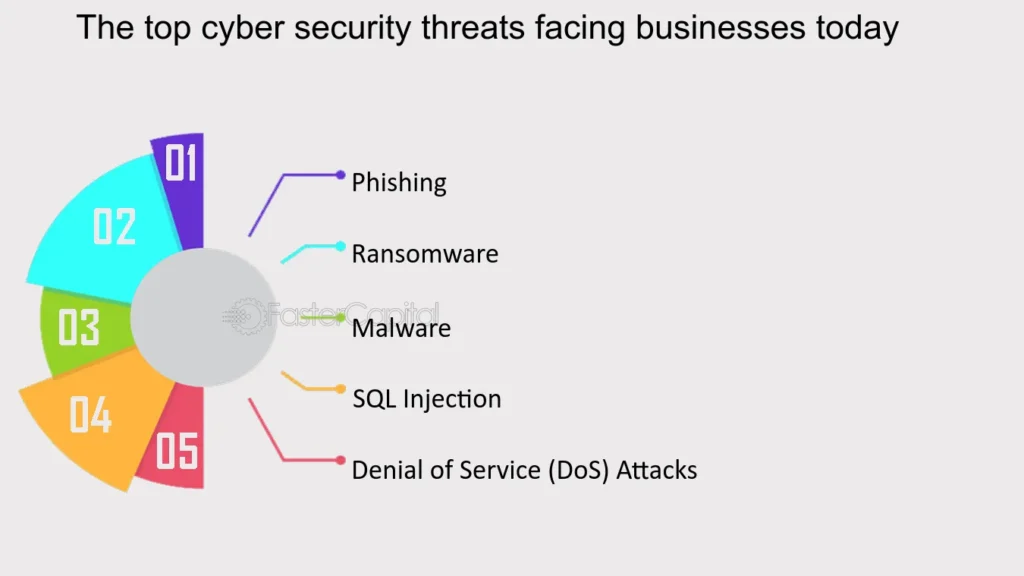
As digital ecosystems grow more complex, so do the cyber threats that aim to exploit them. Some of the most prevalent threats include
1. Ransomware Attacks
Cybercriminals deploy malicious software to encrypt critical data, demanding payment for its release. These attacks often have devastating financial and reputational repercussions and target hospitals, financial institutions, and even government agencies.
2. Phishing and Social Engineering
Emails that are phishing attempt to trick employees into divulging passwords or confidential information by posing as legitimate communications. These attacks often bypass traditional firewalls by exploiting human psychology.
3. Advanced Persistent Threats (APTs)
APTs are stealthy, prolonged attacks where hackers infiltrate systems undetected to extract data over time. These are typically carried out by state-sponsored or highly organized threat actors.
4. Insider Threats
Serious breaches of the organization’s security can be caused by irate employees or careless users. It is well known that it is difficult to identify and avoid these threats.
5. Zero-Day Vulnerabilities
Organizations are severely vulnerable when software vulnerabilities are exploited before they are patched.
2. Core Pillars of a Robust Cybersecurity Strategy
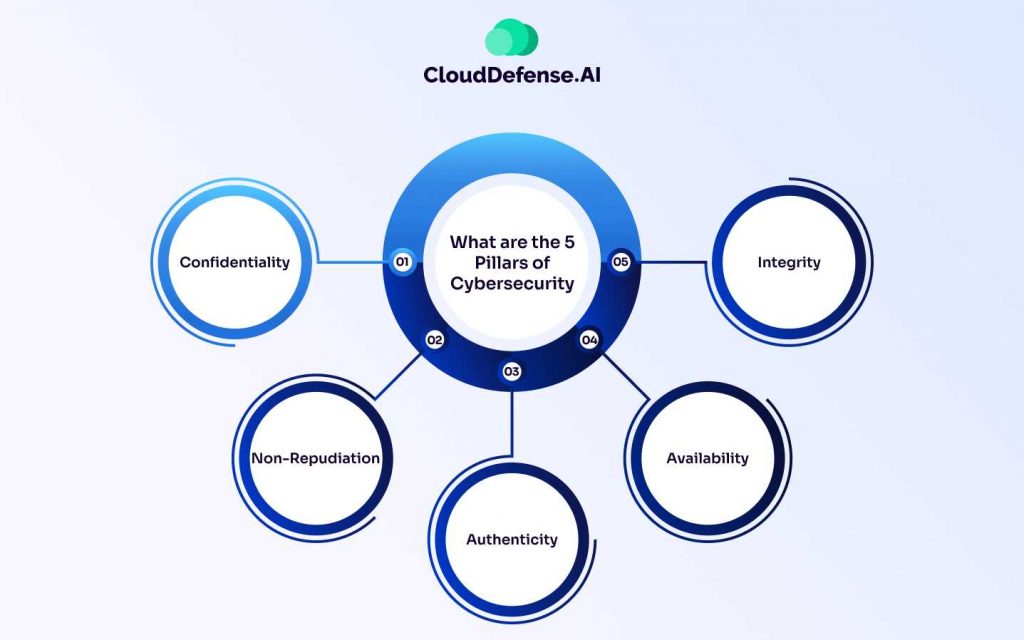
1. Risk Assessment and Management
Prioritizing assets, vulnerabilities, and threats is the first step. Implementing security measures that are proportional to the level of risk is made easier by this procedure. Frameworks like NIST Cybersecurity Framework and ISO/IEC 27001 offer structured methodologies.
2. Multi-Layered Defense Architecture
Implementing layered security—also known as Defense in Depth—ensures that if one layer fails, others will mitigate the threat. This comprises intrusion detection and prevention systems (IPS). Antivirus and antimalware software Endpoint Response and Detection Data encryption protocols
3. Zero Trust Security Model
The Zero Trust philosophy holds that no network user or system should be trusted by default. Verification is required every step of the way, limiting lateral movement of attackers.
4. Security Awareness Training
The first line of defense is the workforce. To reduce human error, regular training in phishing detection, safe password practices, and incident reporting is essential.
5. Incident Response Planning
It is possible to breach even the strongest defenses. A well-documented and tested incident response plan ensures minimal damage and faster recovery when cyber incidents occur.
3. Cybersecurity in the Cloud Era

Cloud security rises to the forefront as businesses shift workloads to the cloud. Threats like misconfigured storage buckets, API vulnerabilities, and unauthorized access require specialized tools and practices.
The following are key cloud security strategies: Identity and Access Controls
Encryption in Transit and at Rest.
Management of Cloud Security Position (CSPM) Continuous Compliance Monitoring
The shared responsibility model of cloud service providers like AWS, Azure, and GCP requires businesses to safeguard their own data, user access, and applications.
4. Overview of Hope InfoTech’s Cybersecurity Online Training

Our online cybersecurity course at Hope InfoTech is designed to be practical, certification-focused, and aligned with the industry. Real-world professionals with extensive field experience provide the training, ensuring that students acquire both theoretical depth and practical skills. Top Cybersecurity Online Course.
Course Duration and Format
Mode: 100% Online (Live instructor-led sessions)
Duration: 8–12 Weeks
Flexible schedules for working professionals and students
Access to recordings, doubt-clearing sessions, and mentorship
5. Cybersecurity Trends to Watch in 2025
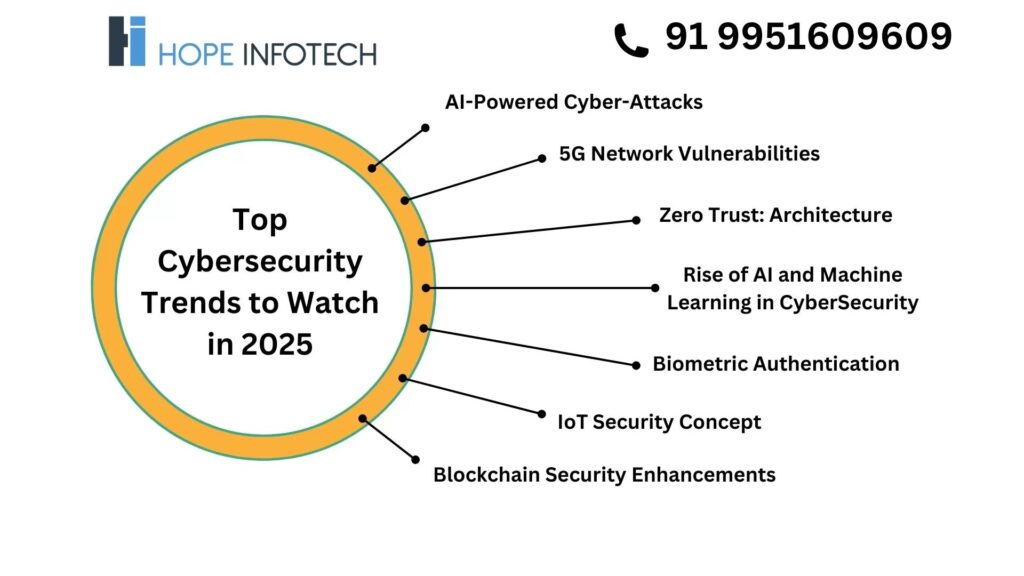
1. AI and Machine Learning in Cyber Defense
Cybersecurity is undergoing a revolution thanks to AI. Anomalies can be identified, threat responses can be automated, and attack patterns can be predicted in real time using machine learning algorithms that analyze large amounts of data.
2. Quantum-Safe Cryptography
It’s possible that the current encryption techniques will be out of date as quantum computing advances. An emerging subfield of cryptography, post-quantum cryptography focuses on the creation of quantum-resistant algorithms.
3. Cybersecurity Mesh Architecture (CSMA)
This modular approach allows for a more scalable, flexible security posture across distributed digital assets. It centralizes policy enforcement while enabling decentralized execution.
4. Regulatory Pressure and Data Privacy Laws
Data privacy is now required by laws like the GDPR, CCPA, and India’s DPDP Act. Non-compliance can result in massive penalties and loss of customer trust.
6. Why Cybersecurity is Critical for Every Organization

Security is not optional, regardless of size. A breach can cost millions, destroy customer confidence, and even lead to legal action. Strong cybersecurity fosters:
1. Customer trust
2. Regulatory compliance
3. Operational stability
4. Competitive advantage
Investing in your future resilience is investing in cybersecurity. Organizations must proactively assess their current maturity, align security with business goals, and create a culture where security is everyone’s responsibility.
7. Partnering with the Right Cybersecurity Experts

The cybersecurity landscape changes every day. Organizations can benefit significantly from partnering with expert service providers offering
- 24/7 Security Operations Center (SOC)
- Threat Intelligence & Real-Time Monitoring
- Managed Detection and Response (MDR)
- Compliance Audit Services
Choosing the right vendor can mean the difference between a quick recovery and a devastating breach.
8. Understanding Cybersecurity: More Than Just Firewalls
Cybersecurity refers to the comprehensive set of technologies, processes, and practices designed to protect systems, networks, programs, and data from digital attacks. These attacks are typically aimed at accessing, altering, or destroying sensitive information; extorting money; or disrupting normal business processes.
In today’s connected world, cybersecurity covers a vast spectrum:
- Network Security
- Endpoint Protection
- Cloud Security
- Application Security
- Identity and Access Management (IAM)
- Data Loss Prevention (DLP)
- Incident Response and Forensics
Cybersecurity is not just a technical concern—it is a strategic imperative for business continuity and brand reputation.
9. Conclusion
The digital battlefield is growing, and skilled cybersecurity professionals are the soldiers we desperately need. You are not just learning with Hope InfoTech’s online training; you are also getting ready to defend systems, data, and people.
The moment has come. Be the shield instead of waiting for a breach to occur.
10. FAQs
Q1. Do I need prior experience to join the course?
Nope! The course is beginner-friendly and also suits experienced professionals looking to upgrade.
Q2. Are the certifications globally recognized?
Yes, the course helps prepare for globally respected certifications like CEH and CompTIA Security+.
Q3. What if I miss a live class?
You’ll get access to recorded sessions that you can watch anytime.
Q4. Will I get a certificate from Hope InfoTech?
Yes, you’ll receive a course completion certificate recognized by industry employers.
Q5. Can I get help with job placement?
Absolutely. Hope InfoTech offers job assistance, resume reviews, and mock interviews.