
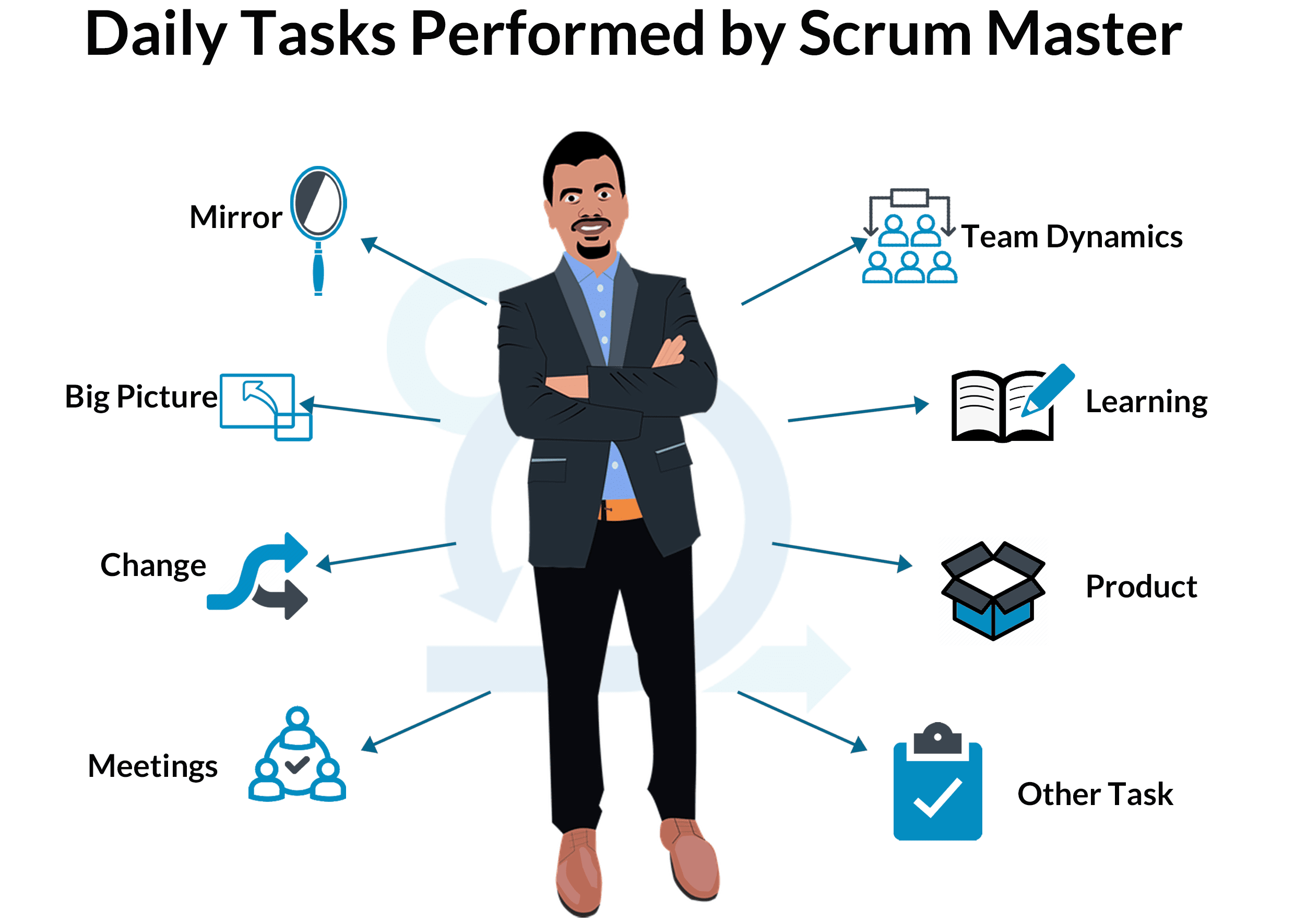
What Is a Scrum Master?
A Scrum Master is a key facilitator and servant-leader within an Agile development team, primarily responsible for ensuring the Scrum framework is implemented effectively. Acting as a bridge between product owners, developers, and stakeholders a Scrum Master is a key facilitator and servant leader whose primary responsibility is to ensure that the Scrum framework is implemented effectively. Acting as a bridge between product owners, developers, and stakeholders the Scrum Master guides the team toward continuous improvement, agility, and accountability. While they don’t manage the team, their role is to remove obstacles, foster collaboration, and ensure that the principles of Scrum methodology are strictly followed.
Core Responsibilities of a Scrum Master
Facilitating Scrum Events
- Sprint Planning
- Daily Stand-ups (Daily Scrum)
- Sprint Reviews
- Sprint Retrospectives
In Scrum, every event—whether it’s Sprint Planning, Daily Scrum, Sprint Review, or Sprint Retrospective—must adhere to three non-negotiable principles:
Time-Boxed: Each meeting has a strict, predetermined duration (for instance, Sprint Planning in a 2-week Sprint takes 4 hours, while Daily Scrum takes 15 minutes). This constraint prevents waste, maintains urgency, and encourages concise communication.
Focused – The agenda must remain laser-targeted on its specific purpose. For example, Sprint Planning is solely about defining the Sprint Goal and selecting work, while the Daily Scrum centers on progress synchronization, not deep problem-solving.
Goal-Oriented – Every event must directly advance the team’s objectives, whether that’s delivering a potentially shippable Increment (Sprint Review) or identifying improvements for the next Sprint (Retrospective).
Coaching and Mentoring Agile Teams
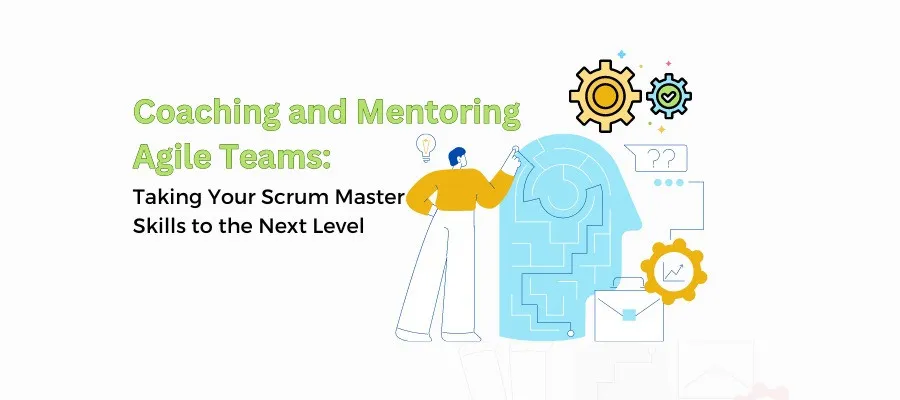
The Agile Manifesto’s values and principles are taught to the team by Scrum Masters as they guide them through Agile practices. They are change agents who support team members in learning collaboration, transparency, and ownership.
1.Removing Impediments
The Scrum Master actively works to eliminate roadblocks that hinder the team’s progress. They quickly resolve issues, whether they are technical, organizational silos, or communication gaps, keeping the team focused and productive.
2.Shielding the Team
One of the less obvious yet critical responsibilities is to protect the team from external distractions and interruptions. Scrum Masters act as a buffer between the team and stakeholders to maintain workflow consistency and high focus levels.
3.Supporting Product Owners
Scrum Masters assist product owners with product backlog management, ensuring that backlog items are clearly defined, prioritized, and ready for sprints. They also facilitate better communication between the product owner and the team.
Top Skills Every Scrum Master Must Master
1.Strong Communication and Facilitation
It is impossible to compromise on excellent written and verbal communication. The Scrum Master must convey ideas, mediate conflicts, and promote transparency within the team and across departments.
2.Servant Leadership
Effective Scrum Masters practice servant leadership — placing the needs of the team first, empowering team members, and building a collaborative environment rooted in trust and respect.
3.Problem Solving and Conflict Resolution
Scrum Masters need to anticipate potential issues and provide proactive solutions. They must be adept at handling team dynamics, mitigating interpersonal conflicts, and ensuring open channels of communication.
4.Knowledge of Agile and Scrum Frameworks
A deep understanding of Scrum theory, practices, rules, and values is essential. This includes frameworks like Kanban, XP (Extreme Programming), SAFe, and other Agile methodologies.
Certifications to Become a Certified Scrum Master
- Certified ScrumMaster® (CSM) – by Scrum Alliance
- Professional Scrum Master™ (PSM) – by Scrum.org
- SAFe Scrum Master (SSM) – by Scaled Agile
- Certified Agile Leadership (CAL)
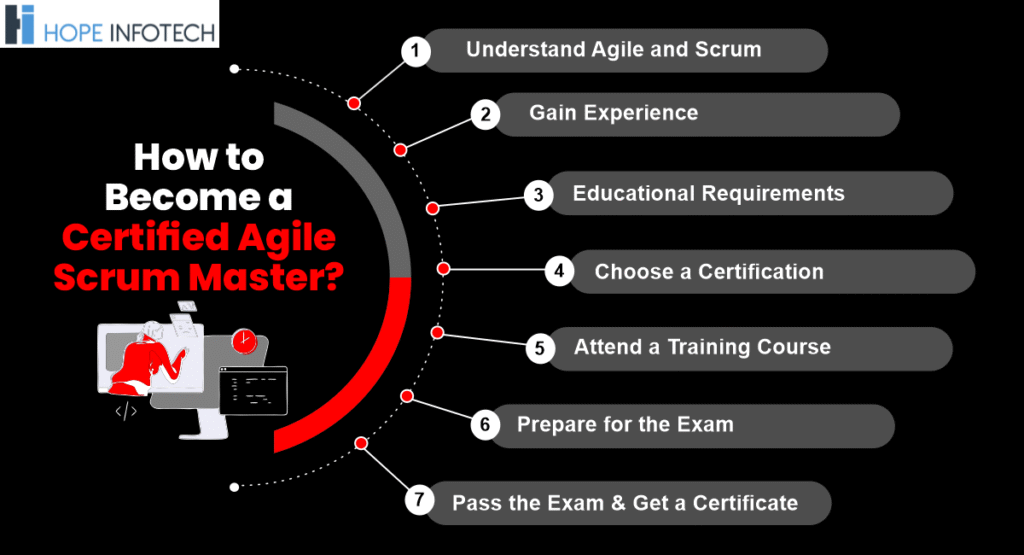
How to Become a Scrum Master: A Step-by-Step Guide
1.Understand Agile and Scrum Fundamentals
Start by reading the Agile Manifesto, the Scrum Guide, and the fundamental iterative development principles. Understanding these foundational concepts is crucial for success.
2.Take a Recognized Scrum Master Course
Enroll in a reputable training program that offers real-world applications, hands-on workshops, and preparation for certification exams.
3.Get Certified
Pass the certification exam (CSM or PSM) to gain your Scrum Master credentials. Most exams test practical understanding, role-based scenarios, and decision-making skills.
4.Gain Practical Experience
Apply Scrum practices in real teams or internships, and participate in Agile projects. Experience with Azure DevOps and tools like Jira, Trello, and Confluence will be extremely beneficial.
5.Continue Learning and Improving
The Agile world is evolving. Engage with the community through conferences, webinars, forums, and constantly upgrade your knowledge with advanced Scrum certifications and real-world exposure.
Scrum Master vs Project Manager: Key Differences
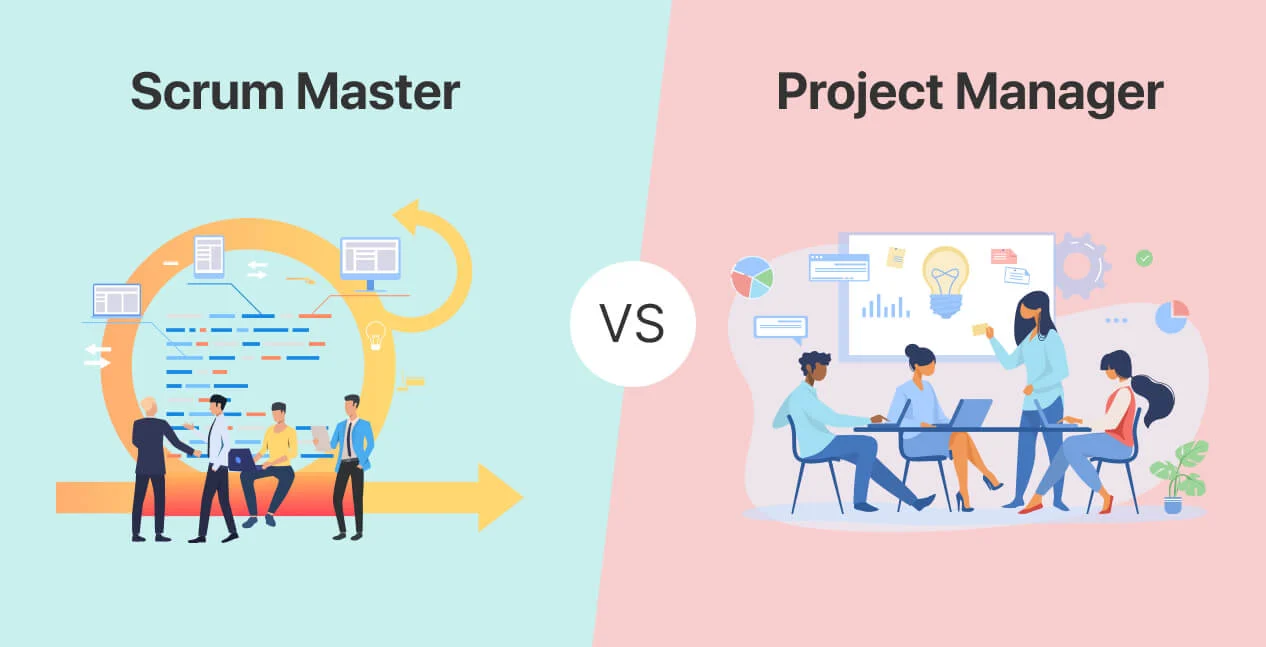
While both roles involve team coordination and project delivery, there are crucial distinctions:
| Aspect | Scrum Master | Project Manager |
| Focus | Agile process & team facilitation | Project scope, cost, schedule |
| Authority | No direct authority over team | Has authority over project and team |
| Metrics | Velocity, team performance | Budget, timeline, deliverables |
| Approach | Servant leadership | Directive leadership |
Challenges Faced by Scrum Masters
- Resistance to change from traditional teams
- Unclear roles and expectations
- Balancing servant leadership with team accountability
- Interdepartmental collaboration hurdles
- Underappreciation of the role by management
The Future of the Scrum Master Role
Due to the widespread adoption of Agile methodologies, the Scrum Master position has gained prominence across industries. Agile practices, particularly Scrum, have expanded into manufacturing, healthcare, finance, retail, and other industries, reshaping the way businesses operate in a business environment that is becoming increasingly complex and fast-paced.
- Integration with AI and Agile analytics
- Expansion into Agile Coaching roles
- Cross-functional collaboration across remote and hybrid teams
Salary Expectations and Career Opportunities
Scrum Masters make varying salaries based on experience and location.
- Entry-Level (0–2 years): $70,000 – $90,000
- Mid-Level (3–5 years): $90,000 – $110,000
- Senior Level (5+ years): $110,000 – $140,000+
Career progression may lead to roles such as
- Agile Coach
- Product Owner
- Project Manager (Agile)
- Scrum of Scrums Lead
- Enterprise Agile Transformation Consultant
Conclusion
The Scrum Master’s role is vital to the successful delivery of Agile projects and is dynamic and empowering. From facilitating collaboration to fostering continuous improvement, Scrum Masters are the heartbeat of Agile teams. The demand for skilled, certified, and experienced Scrum Masters will only continue to rise as more businesses adopt agility.There has never been a better time to get started on your path toward becoming a Scrum Master.